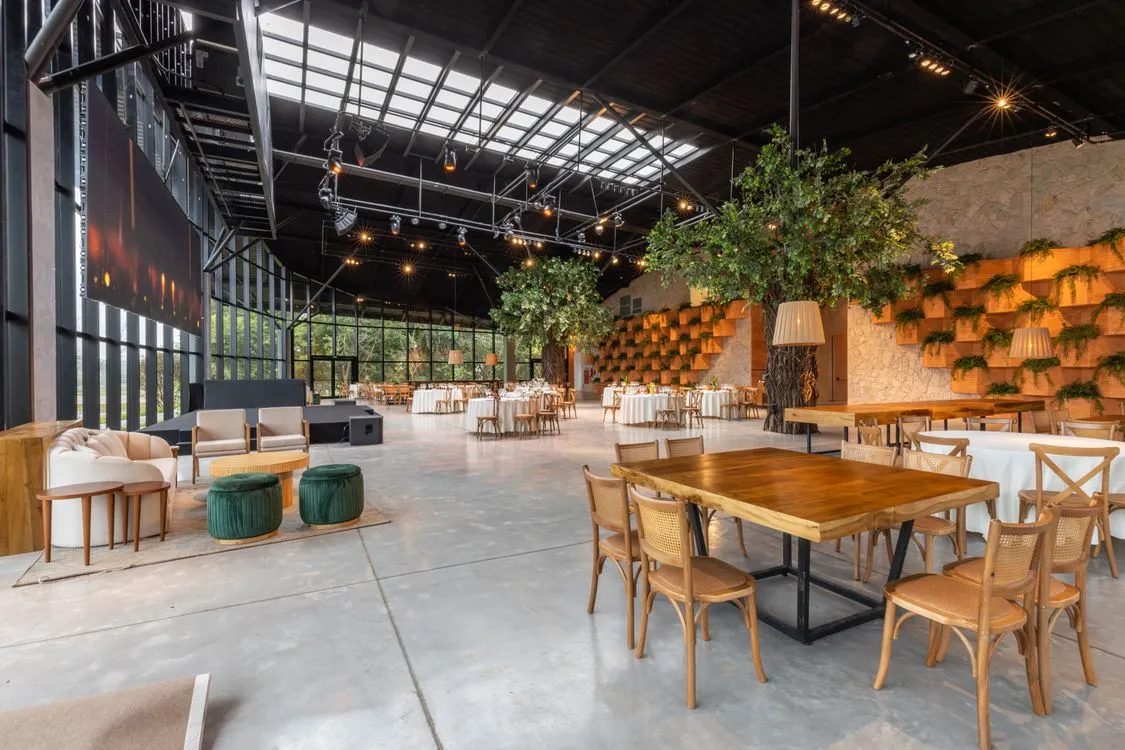
Event uplighting is one of the cheapest, fastest ways to transform an event space. Small lights placed around the edges of the room wash the walls in color, turning a plain hotel ballroom or event hall into something that looks designed — without adding any décor. For evening events in large rooms, adding uplighting to your DJ booking is almost always worth it. For daytime events or venues that are already visually striking, it's often unnecessary.
Here's what uplighting actually does, how to choose colors, and when it makes sense for your event in Little Rock.
What uplighting is
Uplights are compact light fixtures that sit on the floor, usually along the walls, pointed upward. Each one throws a wash of color up the wall. Spaced evenly around a room, they create a continuous band of color that changes the whole mood of the space.
Because they sit on the floor and run on batteries or plug into an outlet, they're quick to set up and take down. That's part of why so many DJs offer them as an add-on — the lighting and the music can be set up together, by the same team, on the same schedule.
What it does for an event
It makes plain rooms look designed. Most hotel ballrooms and event halls are built to be neutral. Uplighting gives them personality without a big décor budget.
It changes the mood across the night. Warm, soft tones during dinner can shift to brighter, more saturated colors when dancing starts. Some setups can change colors on cue, so the lighting moves with the music.
It reinforces your theme or brand. A company's brand colors, a gala's theme, or a nonprofit's signature color on the walls ties the whole room together — and shows up beautifully in photos.
It helps photos. Rooms with low, flat light photograph badly. A wash of color on the walls adds depth to the background of every photo taken that night.
Choosing colors
Brand and theme colors. For a corporate event, matching your company's brand colors is a simple way to make the room feel like yours. For a nonprofit gala, the organization's signature color is a natural choice. Share exact color references with your lighting provider ahead of time — colors on a screen often look different on a wall.
Warm vs. cool. Warm tones like amber and soft gold feel elegant and inviting, and work especially well for dinners and formal galas. Cool tones like blue and purple feel modern and energetic, and work well for parties and dancing.
Fewer colors are better. One or two colors look intentional. A rainbow of colors usually looks less polished — save that for the dance floor portion.
Mind the walls. Uplighting works best on light-colored, plain walls. Dark walls, heavy wood paneling, and busy wallpaper absorb or distort the color.
Uplighting vs. other event lighting
Uplighting is the foundation, but it's not the only kind of event lighting. A few others you'll hear about:
Dance floor lighting. Moving lights and effects aimed at the dance floor add energy once the party starts. They're best kept off during dinner and the program, then brought up when dancing opens, so the room has a clear "the party has started" moment.
Pin spotting. Narrow beams aimed at centerpieces, a cake, or a display table. It makes specific details pop, especially in a dim room. It's more common at weddings and high-end galas, and usually requires a ceiling or truss to hang from.
Gobo or monogram projection. A light that projects a logo, a name, or a pattern onto a wall or dance floor. It's a strong choice for corporate events that want a logo on display, or a gala that wants its name in lights at the entrance.
Stage and podium lighting. If you have speakers, award presentations, or a fashion runway, the people on stage need to be visible, not standing in shadow. Ask your venue what's built in before adding more.
For most events, uplighting plus some dance floor lighting covers the room. The others are worth adding when they serve a specific purpose.
How it works on event day
When lighting is bundled with your DJ, it follows the same schedule as the sound setup. Fixtures go in during load-in, colors are set and tested before doors open, and everything comes down with the rest of the equipment at the end of the night.
A few things help it go smoothly:
Decide on colors in advance. Don't leave it to the day of. Send your color references at least a week out.
Plan around the tables and décor. Uplights sit against the walls, so they need small clear spots that aren't blocked by tables, drapes, or décor. Your floor plan helps here.
Turn down the house lights. Uplighting only works when the room's overhead lights are dimmed. Coordinate with the venue so someone is ready to lower the lights when guests arrive.
Plan any color changes. If you want the lighting to change when dancing starts, put it in your run of show so it happens on cue.
What venues allow
Most venues in Little Rock and Central Arkansas allow uplighting, but some have rules about it. Before you book lighting, ask your venue:
- Is uplighting allowed, and are there restrictions on where it can go?
- Are there enough outlets around the room, or should the lighting be battery-powered?
- Does the venue have its own lighting that needs to be turned down or coordinated?
- Are there fire code or safety rules about placing fixtures near exits or drapery?
For more on what to confirm with your venue, see What Your DJ Needs From Your Venue. If you're still choosing a venue, my Little Rock event venue guide covers which spaces have the most character on their own.
When it's worth it — and when it isn't
Worth it:
- Evening events in hotel ballrooms, convention spaces, and event halls with plain walls
- Galas and corporate events where you want a polished, branded look
- Events where photos and social media matter
- Parties with a dance floor, where lighting adds energy
Often not necessary:
- Daytime events or rooms with lots of natural light
- Venues that are already visually striking, like historic buildings, galleries, or outdoor spaces
- Small, casual gatherings where atmosphere comes from the people, not the room
What it costs
Lighting is usually an add-on to your DJ booking rather than part of the base price, and the cost depends on how many fixtures the room needs and how much setup is involved. Bundling lighting with your DJ is usually simpler — and often cheaper — than hiring a separate lighting company, since it's one team, one setup window, and one point of contact. For a broader look at DJ pricing in Little Rock and what's typically included, see How Much Does a DJ Cost in Little Rock?
Frequently asked questions
What is event uplighting?
Small lights placed on the floor around a room, pointed up the walls to wash them in color. It changes the mood of a space without changing the décor.
Is uplighting worth it for an event?
Usually, yes, for evening events in large rooms with plain walls. It's less necessary in daytime events or venues that are already visually striking.
Can uplighting match my company or brand colors?
Yes. Most modern uplights can be set to almost any color. Share your exact brand colors with your lighting provider ahead of time.
Want lighting with your DJ booking? Tell me about your venue and your colors and I'll put together a quote for both.