
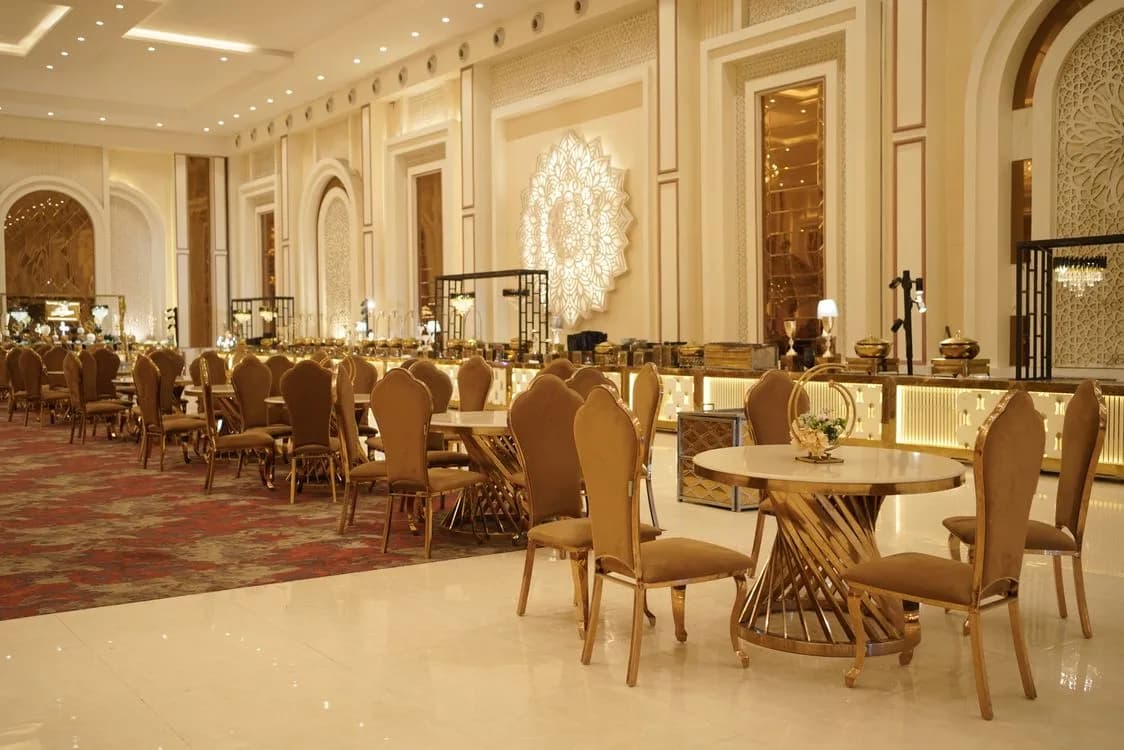
The venue you choose shapes everything about your event — not just how it looks, but how it sounds, how the energy moves through the room, and whether the DJ can actually do the job you hired them to do. I've set up at most of the major event venues in Little Rock and Central Arkansas, and what I know about each space is different from what the venue sales team will tell you.
This is a working DJ's guide to the best event spaces in Central Arkansas — what each one is built for, what the audio environment is like, and what's worth knowing before you commit.
What makes a venue work for live DJ events
Before the breakdown: here's how I evaluate a venue from a DJ and audio perspective.
Room acoustics. Hard floors, high ceilings, and bare walls create echo and make it harder to achieve clean, controlled sound. Carpeted rooms, drapes, and soft furnishings absorb sound and make the mix cleaner. Neither is inherently better — but each requires a different approach to speaker placement and EQ.
Power access. A DJ setup requires reliable power, ideally on a dedicated circuit away from catering equipment. Older buildings with limited electrical capacity can cause issues. Always worth confirming with the venue before the event.
Existing audio infrastructure. Some venues have built-in house sound systems that can be used or integrated. Others have nothing — the DJ brings everything. Knowing which you're dealing with changes the setup requirements significantly.
Load-in logistics. Freight elevators, parking restrictions, loading dock access, and setup time windows all affect what's possible. A venue that won't let vendors in until two hours before doors open is a harder environment than one that allows an all-day setup.
With that framework in mind, here's the breakdown.
Large-scale venues for galas and major corporate events
Statehouse Convention Center
The Statehouse is the standard reference point for large-scale events in Little Rock — nonprofit galas, association conferences, corporate award ceremonies, and political fundraisers. The main ballroom has the ceiling height and square footage to support a proper DJ setup, and it's one of the few venues in the market where the room itself doesn't fight you.
The challenge: the space is large enough that speaker coverage requires planning. A single pair of mains pointed at the dance floor won't reach the back of a fully set room. For larger events, additional speakers or a distributed audio approach is worth discussing with your DJ before the date.
For galas specifically, the Statehouse works well because the room is configurable — cocktail in one space, dinner in the ballroom, dancing after the program. The transitions between those phases are where a good gala DJ earns their fee.
Marriott Little Rock
The Marriott downtown is the go-to hotel venue for mid-to-large corporate events and formal dinners. The ballroom has solid acoustics for its size, and the hotel infrastructure (AV team, loading access, venue coordinator) makes it a smoother experience for vendors than some of the more independent venues. For corporate clients who want a reliable, professional environment without surprises, it's a strong default.
Embassy Suites Little Rock
The Embassy Suites on the river is a strong option for events that want both a good room and a view. The event space is more intimate than the Statehouse or Marriott ballroom — better suited to 100–200 guest events than 400+ — which makes it a natural fit for upscale dinners, client appreciation events, and fundraisers that want a more personal feel. The acoustics are manageable and the room responds well to groove-based music at moderate volume.
Mid-size venues with character
The Capital Hotel
The Capital Hotel's event spaces are some of the most elegant in the city, and they come with the acoustic challenges that go with older buildings. The spaces are intimate and refined, which is exactly right for a certain kind of corporate dinner or private event — but they require a DJ who knows how to keep volume at levels that work in a smaller, reverberant room. Overpowering the space is easy. Playing it correctly takes experience.
For events of 75–150 guests that need to feel elevated and intentional, the Capital is one of the best options in Little Rock. Just make sure your DJ has played it.
Chenal Country Club
One of the more versatile event venues in West Little Rock. The ballroom works for corporate dinners and galas; the outdoor terrace works for summer events and casual receptions. The membership-connected events here tend toward a professional, upscale crowd — the music expectations match that profile.
The Venue at Westwind
A mid-size event space that's become a reliable option for weddings and private celebrations in the West Little Rock area. More flexible layout than hotel ballrooms, which allows for creative room configurations. Good for events in the 75–200 guest range that want something slightly less corporate in feel.
Boutique and non-traditional spaces
Converted warehouse and industrial spaces
Little Rock has a growing number of converted warehouse and industrial event spaces, particularly in the SoMa and River Market areas. These spaces have a lot of visual appeal — exposed brick, high ceilings, wood floors — and real acoustic challenges. Hard surfaces everywhere mean more reverb and harder-to-control sound. A good DJ brings the right equipment for the room, including speakers optimized for dispersal rather than throw.
For boutique openings and brand activations, and private parties that want something different from a hotel ballroom, these spaces deliver on atmosphere. Just expect more complexity in the audio setup.
Outdoor pavilions and rooftop venues
The River Market area and several properties around the Little Rock waterfront offer outdoor event options that work well for summer events, receptions, and brand activations. Outdoor audio is a different discipline from indoor — coverage over a wide space, managing competing ambient noise, dealing with wind. For a full breakdown of what outdoor events require, see Outdoor and Summer Events in Little Rock: What Changes When You DJ Outside.
Private estate and residential venues
For larger private events — estate parties, large graduation celebrations, milestone anniversary events — private residential venues present the widest range of audio challenges because there's no standard. Every location is different. Power availability, outdoor vs. indoor, neighbor considerations, and load-in access all vary. These events require the most pre-event planning and communication between the client, the venue, and the DJ.
What to ask your venue before booking a DJ
Before you lock in a venue and a DJ, it's worth confirming a few things:
- Does the venue have a preferred or exclusive vendor list? Some venues require you to use their in-house AV team or limit outside vendors.
- What's the electrical situation? How many dedicated circuits are available for DJ and lighting equipment?
- What's the load-in window? How early can vendors arrive, and is there freight elevator access?
- What are the sound restrictions? Some venues have noise ordinances or curfews that affect how a set can be run.
- Is there an in-house audio system? If so, can outside vendors integrate with it or do they set up independently?
Getting clear answers to these before you sign anything prevents a significant amount of stress on the day.
Working in Little Rock
One thing that's true across all of these venues: the Little Rock event market is small enough that relationships matter. Venues and DJs who have worked together before communicate better and create smoother events. When you're interviewing a DJ for your event, asking whether they've played at your venue is worth a direct question — and asking what the experience was like tells you even more.
DJ AJ's availability for corporate events, galas, boutique openings, and private parties in Little Rock — reach out with your venue and date and let's talk through what the setup looks like.